















Introduction: A Familiar Fruit in an Unfamiliar Market
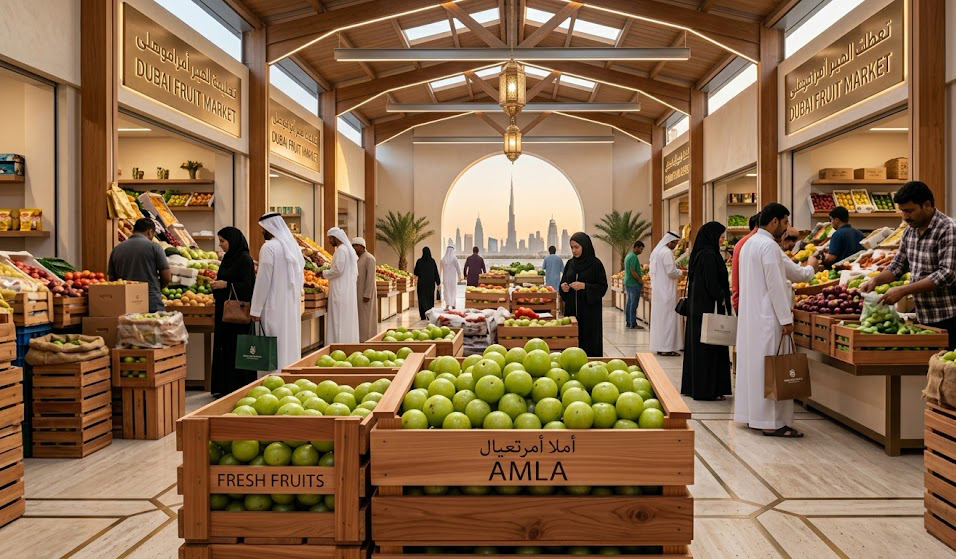
Walk into certain wholesale fruit markets in Dubai during peak winter months, and you will notice something interesting.
Among imported citrus, apples, and berries, there are small green fruits—firm, glossy, and sharply sour. Many shoppers walk past them without a second glance. But others buy them in bulk.
These are fresh amla (Indian gooseberry).
For many in Dubai’s Indian community, amla is not just another fruit. It is part of daily routines—used in home remedies, cooking, juices, and hair care traditions passed down for generations.
What is less understood, however, is how this fruit moves through Dubai’s supply chain, why its demand remains steady despite its niche appeal, and how buyers—both households and businesses—can source it properly without running into quality or pricing issues.
This article breaks that down from a practical, supply-focused perspective.
What Exactly Is Amla—and Why Has It Lasted 5,000 Years?
Amla, or Indian gooseberry, is a small green fruit known for its intense sourness and fibrous texture.
But its long history is not just about taste.
In traditional Indian systems like Ayurveda, amla is valued for its functional role—meaning it is consumed not just as food, but for its perceived benefits in digestion, immunity, and overall balance.
In modern Dubai, this translates into several everyday uses:
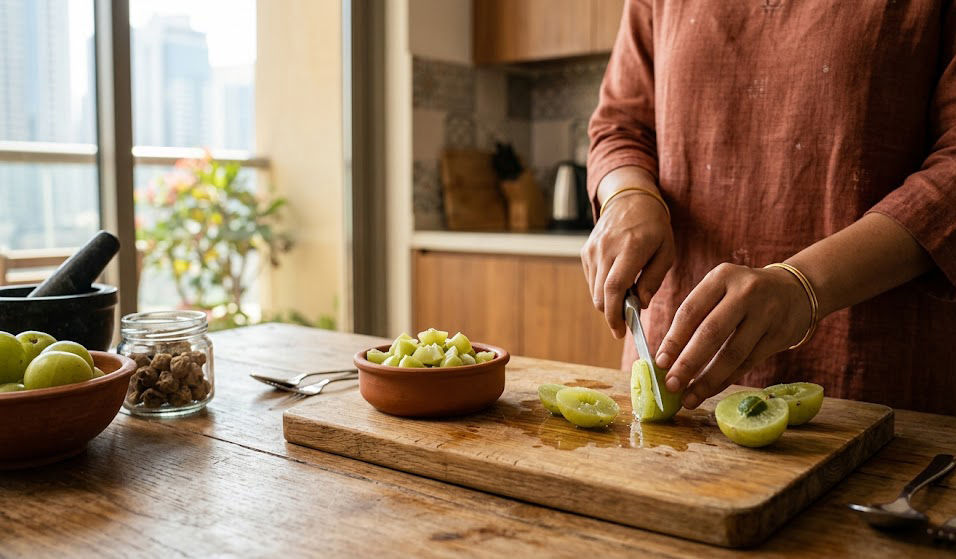
- Fresh consumption with salt or spices
- Homemade juices and tonics
- Pickles and chutneys
- Hair oils and masks
- Dried or powdered forms for long-term storage
What makes amla unique in the UAE context is this:
It is not driven by trend.
It is driven by habit.
And habits tend to create consistent demand—even when a product is not widely understood by the broader market.
Why Demand for Fresh Amla in Dubai Remains Consistent
From a supply perspective, amla behaves differently compared to most fruits sold in Dubai.
1. It Is Not Trend-Driven
Unlike avocados, blueberries, or dragon fruit, amla demand does not spike due to social media or diet trends.
Instead, it comes from:
- Cultural familiarity
- Daily consumption routines
- Household-level repeat purchasing
This makes demand more predictable, especially within specific communities.
2. It Serves Multiple Use Cases
Amla is not bought for a single purpose.
The same batch may be used for:
- Juice preparation
- Cooking
- Medicinal use
- Hair applications
This multi-use nature increases its value per purchase, especially for families buying in bulk.
3. It Has a Strong Seasonal Pattern
Most fresh amla available in Dubai is imported from India.
This means availability is tied to harvest cycles.
Peak season typically falls between:
- November to February
During this window:
- Quality is highest
- Prices are relatively stable
- Supply is more consistent
Outside this period:
- Prices increase
- Freshness declines faster
- Buyers rely more on frozen, dried, or processed alternatives
For procurement managers and grocery buyers, understanding this seasonal cycle is critical to avoiding overpaying or stocking poor-quality fruit.
Where Buyers Get Confused: The Amla Sourcing Gap in Dubai
Despite steady demand, many buyers—both individuals and businesses—face the same challenges when sourcing fresh amla Indian gooseberry in Dubai UAE.
These issues are rarely explained clearly in retail environments.
Confusion #1: “All Amla Looks the Same”
At first glance, amla appears uniform.
But in practice, quality varies significantly based on:
- Harvest timing
- Storage conditions
- Transport duration
- Handling at wholesale markets
Common issues include:
- Overripe fruit (soft, dull color)
- Underripe fruit (extremely hard, less juicy)
- Internal browning
- Surface damage from poor handling
Without experience, buyers often cannot distinguish between a fresh batch and one that is already declining.
Confusion #2: “Why Does Price Change So Much?”
Amla pricing in Dubai is not random.
It is influenced by:
- Import volumes from India
- Weather conditions during harvest
- Air vs sea freight logistics
- Demand spikes during winter
Unlike staple fruits, amla does not have a stabilized pricing structure in the UAE market.
This leads to situations where:
- The same fruit costs significantly different amounts week to week
- Retail buyers assume overpricing, while the issue is actually supply fluctuation
Confusion #3: “Retail vs Wholesale Quality—Which Is Better?”
This is a common misunderstanding.
Many assume supermarket produce is always better.
In reality:
- Retail often prioritizes appearance and shelf life
- Wholesale prioritizes volume and turnover speed
For amla specifically:
- Freshness depends more on time since arrival than on where it is sold
- A fast-moving wholesale batch may be fresher than a slow-moving retail display
In practice, suppliers working closely with Dubai-based distributors such as JMB Farm Fresh often observe that freshness is more about supply chain timing than retail presentation.
How to Judge Fresh Amla (Even If You’re Not Experienced)
For buyers unfamiliar with amla, quality assessment can feel uncertain.
However, a few simple checks make a significant difference.
Visual Indicators
Look for:
- Bright green color (not yellowish or dull)
- Smooth skin with minimal blemishes
- Uniform size across the batch
Avoid:
- Wrinkled skin
- Dark patches
- Visible bruising
Texture and Firmness
Fresh amla should feel:
- Firm but not rock-hard
- Slightly yielding under pressure
If it feels:
- Too soft → likely overripe
- Extremely hard → may be immature and less juicy
Smell (Often Overlooked)
Fresh amla has a clean, slightly sharp scent.
If there is:
- No smell → may be stored too long
- Sour-fermented smell → already deteriorating
Internal Quality (For Bulk Buyers)
If buying in larger quantities:
- Cut one fruit open
- Check for even color inside
- Avoid brown or dry sections
This simple step can prevent waste at scale—especially for restaurants or juice preparation.
Bulk Buying Amla in Dubai: When It Makes Sense—and When It Doesn’t
Bulk purchasing is common for fruits in Dubai, but amla requires a slightly different approach.
When Bulk Buying Works
Bulk sourcing makes sense when:
- You use amla regularly (daily or weekly)
- You process it quickly (juice, pickles, cooking)
- You have proper storage (cool, dry, ventilated space)
For catering businesses and restaurants, this is often the most cost-efficient approach during peak season.
When It Becomes Risky
Bulk buying can lead to loss if:
- Storage conditions are not controlled
- Usage is inconsistent
- Supply quality is already declining
Because amla has a limited fresh shelf life, overbuying often results in:
- Spoilage
- Texture degradation
- Reduced usability
This is one of the most common mistakes seen among first-time bulk buyers in Dubai.
The Role of Seasonality: Why Winter Changes Everything
In the UAE produce market, winter is not just a temperature shift.
It is a supply shift.
Amla availability aligns with:
- Indian harvest cycles
- Favorable shipping conditions
- Lower spoilage risk during transit
This makes winter the only reliable window for consistent fresh amla sourcing.
Outside this period:
- Quality becomes inconsistent
- Prices increase
- Alternatives dominate (frozen, dried, processed forms)
For buyers planning ahead, this seasonality should shape purchasing strategy—not just availability decisions.

How Amla Moves Through Dubai’s Supply Chain
To understand why quality and pricing vary so much, it helps to look at how fresh amla Indian gooseberry in Dubai UAE actually reaches the market.
Step 1: Harvest in India
Amla is primarily sourced from regions in India where it grows in large volumes during winter.
At this stage:
- Fruit is harvested in bulk
- Sorting is often minimal at origin
- Quality depends heavily on harvest timing
Early harvests tend to be firmer and more stable for transport, while late harvests may have better taste but shorter shelf life.
Step 2: Packing and Export
Once harvested, amla is packed for export.
Here is where variability begins.
Some batches are:
- Carefully graded and packed in ventilated crates
- Poorly packed in bulk sacks with minimal protection
The difference between these two approaches becomes very visible once the fruit reaches Dubai.
Damage during packing often leads to:
- Internal browning
- Faster spoilage
- Uneven ripening
Step 3: Transport to UAE
Amla reaches Dubai through:
- Air freight (faster, more expensive, better quality retention)
- Sea freight (slower, more economical, higher risk of degradation)
For a sensitive fruit like amla, time in transit matters more than cost savings.
Longer transit often results in:
- Loss of firmness
- Reduced juice content
- Shorter shelf life upon arrival
Step 4: Wholesale Markets in Dubai
Once in Dubai, amla typically enters large wholesale markets before being distributed to:
- Retail stores
- Restaurants
- Grocery chains
- Direct buyers
At this stage, turnover speed becomes critical.
High-turnover sellers:
- Move stock quickly
- Maintain fresher inventory
Low-turnover sellers:
- Hold stock longer
- Increase risk of spoilage
This is why two buyers can purchase from the same market but experience completely different quality.
Step 5: Retail and End Use
By the time amla reaches:
- Supermarkets
- Smaller grocery stores
- Online platforms
It has already passed through multiple handling points.
Each step adds risk.
For buyers, this means:
Freshness is not determined by where you buy—it is determined by how quickly the fruit moved through the system.
Fresh vs Processed Amla: What Buyers Often Overlook
Many Dubai residents are familiar with:
- Amla juice bottles
- Amla powders
- Amla-based hair products
But there is a clear difference between fresh amla and processed forms.
Fresh Amla
Advantages:
- Higher moisture and natural texture
- More versatility (food, juice, pickles)
- Better control over preparation
Limitations:
- Short shelf life
- Requires preparation time
- Seasonal availability
Processed Amla (Juice, Powder, Dried)
Advantages:
- Longer shelf life
- Convenience
- Consistent availability year-round
Limitations:
- Less control over quality
- Possible additives (depending on source)
- Reduced freshness characteristics
For many households, the decision is not either/or.
It is seasonal:
- Fresh amla during winter
- Processed alternatives during off-season
Common Mistakes Buyers Make When Buying Amla in Dubai
Across both household and commercial buyers, a few patterns repeat consistently.
Mistake 1: Buying Based on Price Alone
Lower price often signals:
- Older stock
- Poor handling
- Longer transit time
For a fruit like amla, cheaper batches can lead to:
- Higher waste
- Lower usability
In practice, the actual cost becomes higher when spoilage is factored in.
Mistake 2: Ignoring Batch Consistency
Even within a single purchase, quality can vary.
Buyers often:
- Check only the top layer
- Ignore variation within the crate
For bulk purchases, this creates:
- Uneven results in cooking or juicing
- Increased sorting time
- Hidden waste
Mistake 3: Poor Storage After Purchase
Amla does not require complex storage, but it does require correct handling.
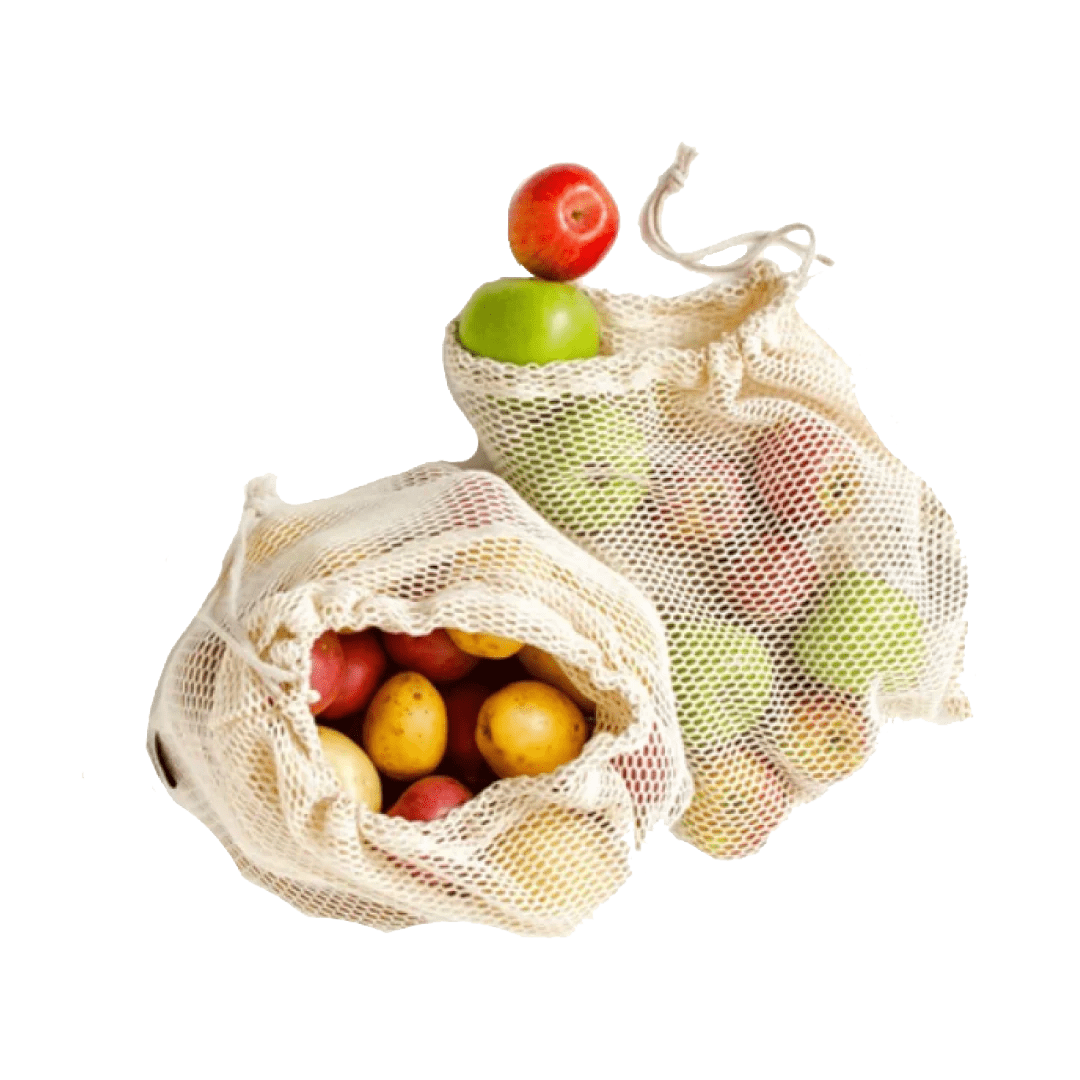
Common issues:
- Storing in sealed plastic bags (traps moisture)
- Exposure to heat
- Lack of ventilation
Better approach:
- Keep in a cool, dry space
- Use breathable containers
- Avoid stacking heavy weight on top
Small adjustments here significantly extend usability.
Mistake 4: Overestimating Shelf Life
Many first-time buyers assume amla behaves like apples or citrus.
It does not.
Depending on condition, fresh amla may last:
- 5–10 days in good conditions
- Less if already stressed during transport
Overbuying without planning usage leads directly to waste.
Amla for Businesses: What Restaurants and Caterers Should Consider
For food businesses in Dubai, amla is not a mainstream ingredient—but it can still play a valuable role.
Where It Fits in Food Service
Amla is commonly used in:
- Indian and Ayurvedic-inspired menus
- Specialty beverages
- Pickles and condiments
- Health-focused dishes
Its strong flavor means it is rarely used in large quantities—but consistency matters.
Key Procurement Considerations
For businesses, sourcing decisions should focus on:
1. Consistency over cost
- Reliable batches reduce preparation variability
2. Supplier turnover rate
- Faster-moving suppliers often deliver fresher stock
3. Seasonal planning
- Build menus around availability rather than forcing year-round use
4. Pre-processing capability
- Juice or pickle excess stock to reduce waste
Waste Management Strategy
A practical approach used by experienced buyers:
- Use premium-grade amla for fresh applications
- Use slightly lower-grade fruit for:
- Juicing
- Cooking
- Pickling
This reduces waste while maintaining output quality.
The Growing Interest in Amla Beyond the Indian Community
While demand is still concentrated within Indian households, there are signs of gradual expansion.
Drivers include:
- Increased interest in traditional foods
- Cross-cultural cooking trends
- Growing awareness of functional foods
However, adoption remains limited due to:
- Strong taste profile
- Lack of familiarity in preparation
- Limited exposure in mainstream retail
For suppliers, this creates an interesting dynamic:
Amla is stable—but not yet scaled.
Choosing the Right Supplier: What Actually Matters
For buyers looking to buy amla online in Dubai or source through distributors, the focus should not be on branding alone.
Instead, evaluate:
- Supply frequency (how often fresh batches arrive)
- Handling practices (packaging, storage conditions)
- Transparency (clear information about origin and arrival timing)
- Consistency across batches
Some UAE buyers prefer working with established wholesale produce providers rather than fragmented retail sourcing, especially when dealing with seasonal items like amla.
This reduces uncertainty around quality and availability.
Amla and Health Claims: What Buyers Should Understand
Amla is often discussed in terms of health benefits.
In Dubai, this is especially visible in:
- Conversations around amla hair growth in UAE
- Demand for amla juice fresh UAE
- Interest in Ayurvedic dietary habits
However, from a sourcing and food supply perspective, it is important to stay grounded.
What Is Generally Accepted
Amla is widely known for being:
- Naturally rich in vitamin C
- Used in traditional diets for digestion and balance
- Incorporated into long-standing cultural practices
These points explain its continued relevance.
Where Buyers Should Be Careful
Many claims circulating in markets and online platforms are:
- Oversimplified
- Poorly explained
- Sometimes exaggerated
For example:
- “Cures hair loss”
- “Detoxes the body instantly”
- “Works like a supplement replacement”
These statements are not how experienced food professionals approach produce.
Instead, they see amla as:
A functional fruit with cultural and nutritional value, not a quick-fix solution.
Why Amla Pricing Feels Unpredictable in Dubai
Buyers often ask:
“Why does amla cost change so much week to week?”
The answer lies in how niche produce behaves in an import-driven market like the UAE.
Key Pricing Drivers
1. Harvest Volume in India
If production drops or is delayed, supply tightens quickly.
2. Shipping Method
Air freight increases cost but preserves quality.
Sea freight reduces cost but increases risk.
3. Demand Concentration
Demand is not evenly spread—it is concentrated within specific communities.
This means even small demand spikes can affect pricing.
4. Shelf Life Pressure
Unlike durable fruits, amla must move quickly.
Sellers adjust prices to avoid losses from spoilage.
What This Means for Buyers
- Price fluctuations are not necessarily manipulation
- They often reflect real supply chain conditions
- Timing purchases during peak season reduces volatility
For regular buyers, tracking patterns over a few weeks provides more insight than reacting to a single price change.
Local vs Imported: Why Amla Is Almost Always Imported
Unlike some vegetables grown locally in the UAE, amla is almost entirely imported.
This is due to:
- Climate requirements
- Agricultural conditions specific to Indian regions
- Established supply chains from Indian farms
For buyers, this means:
- There is no “local vs imported” quality comparison
- The real comparison is fresh vs delayed import
Understanding this helps avoid confusion when evaluating price and quality differences.
Practical Buying Strategy: A Simple Framework
For both households and businesses, a practical approach to sourcing Indian gooseberry in Dubai can be summarized in three steps.
Step 1: Align with Season
Buy fresh amla primarily during:
- November to February
Outside this window:
- Shift to processed alternatives
- Avoid relying on inconsistent fresh supply
Step 2: Buy Based on Usage Speed
Estimate how quickly you will use the fruit.
- Daily use → small, frequent purchases
- Bulk processing → larger seasonal buying
Avoid buying based on availability alone.
Step 3: Test Before Scaling
Before committing to larger quantities:
- Purchase a small batch
- Check internal quality
- Monitor how it holds over a few days
This reduces risk significantly.
A Quiet but Reliable Category in Dubai’s Produce Market
In a market where many fruits rise and fall based on trends, amla remains steady.
It does not rely on:
- Marketing cycles
- Social media popularity
- Imported lifestyle narratives
Instead, it continues to move through the system because:
- People who use it understand it
- Demand is rooted in habit, not hype
- Supply follows a predictable seasonal rhythm
In practice, suppliers working closely with Dubai-based distributors such as JMB Farm Fresh often observe that niche products like amla perform best when handled with consistency rather than scale-driven urgency.
Final Thoughts: Understanding Amla Beyond the Surface
To someone unfamiliar, amla is easy to overlook.
It is small, sour, and not immediately appealing.
But in the context of Dubai’s diverse food ecosystem, it represents something more important:
A category of produce that is:
- Culturally anchored
- Functionally used
- Seasonally sensitive
- Supply-chain dependent
For buyers—whether households or businesses—the key is not just knowing what amla is.
It is understanding:
- When to buy it
- How to judge its quality
- How to use it efficiently
- And when to avoid it
That is what separates informed sourcing from trial-and-error purchasing.
FAQs
1. Where can I buy fresh amla in Dubai UAE?
Fresh amla is typically available in wholesale fruit markets, Indian grocery stores, and some online platforms during peak winter season (November–February).
2. How do I know if amla is fresh?
Look for bright green color, firm texture, smooth skin, and no internal browning when cut open. Avoid soft or wrinkled fruit.
3. Can I store amla for a long time?
Fresh amla has a short shelf life (5–10 days under good conditions). For longer storage, it is often processed into juice, pickles, or dried forms.
4. Is fresh amla better than amla juice or powder?
Fresh amla offers more versatility and control over preparation, while processed forms provide convenience and longer shelf life.
5. Why is amla expensive sometimes in Dubai?
Price changes are influenced by import volumes, seasonality, transport methods, and demand concentration within specific communities.








 Home
Home  Whishlist
  Compare
  Checkout