












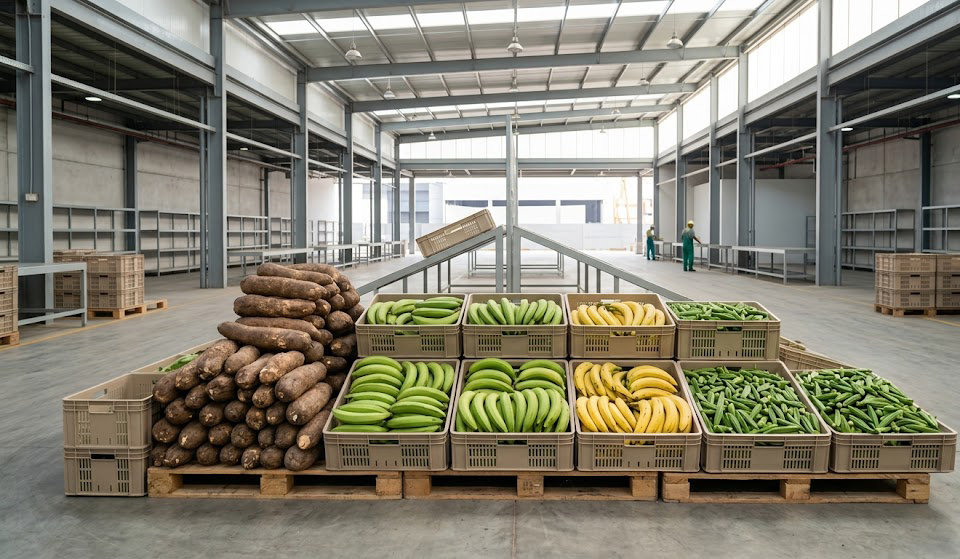
Introduction: A Quiet Shift in Dubai’s Ingredient Landscape
Walk through any serious produce market in Dubai today—whether a wholesale hub or a neighborhood grocer—and you’ll notice something changing.
It’s subtle at first.
A slightly larger pile of plantains. Fresh okra that looks different from the standard varieties. Bundles of unfamiliar greens. Root vegetables that don’t match typical Middle Eastern or South Asian cooking patterns.
This isn’t random.
African cuisine is gradually entering Dubai’s food ecosystem—not as a trend driven by social media, but as a result of shifting demographics, evolving restaurant menus, and growing demand for more diverse, nutrient-dense ingredients.
For restaurant buyers, catering companies, and even families cooking at home, this creates a new kind of question:
What are these ingredients—and how do you actually buy and use them without wasting money or compromising quality?
This guide answers that from a supply and sourcing perspective, not just a culinary one.
Why African Cooking Ingredients Are Gaining Ground in Dubai
The demand for African cooking ingredients in Dubai is not happening in isolation. It’s being driven by three overlapping forces.
1. Demographic Demand and Diaspora Buying Patterns
Dubai has long been a global city, but in recent years, African communities—especially from Nigeria, Ethiopia, Ghana, and Kenya—have become more visible in both residential and business sectors.
With that comes consistent demand for:
- Fresh staples like plantains and yams
- Leafy greens such as bitter leaf and amaranth
- Functional ingredients like moringa
Unlike occasional “exotic” purchases, these are weekly essentials, which changes how suppliers stock and distribute them.
2. Restaurant Experimentation and Menu Expansion
Restaurant operators are under pressure to differentiate.
African cuisine offers:
- Bold, layered flavors
- Naturally plant-forward dishes
- Strong alignment with global “whole food” and “heritage cooking” movements
In practice, chefs are not always building full African menus. Instead, they are integrating ingredients into fusion dishes—for example:
- Grilled plantain sides in modern bistros
- Okra in Middle Eastern stews
- Moringa in wellness-focused menus
This creates a hybrid demand pattern that suppliers are still adjusting to.
3. Health Positioning Without the “Health Marketing”
Interestingly, many African ingredients are gaining traction without being marketed as “superfoods.”
They simply fit into existing health-conscious behavior:
- High fiber vegetables
- Naturally low-processed ingredients
- Strong micronutrient profiles
Buyers are not always looking for African cuisine specifically—they are looking for better ingredients, and these happen to fit.
The First Challenge: Sourcing Without Confusion
For most buyers, the biggest barrier is not interest—it’s uncertainty.
“Where do I even find these ingredients?”
Unlike standard produce, African vegetables are not always consistently available across:
- Supermarkets
- Small grocers
- Online delivery platforms
Availability depends on:
- Import cycles
- Supplier networks
- Demand clustering in specific areas
This is why many first-time buyers experience inconsistency.
Wholesale vs Retail: What Actually Changes?
A common misunderstanding is that wholesale and retail offer the same products at different prices.
That’s not entirely accurate.
In wholesale environments:
- You’ll find broader variety
- Stock may be less visually “perfect” but fresher
- Quantities are larger
- Pricing reflects volume and sourcing timing
In retail environments:
- Selection is curated
- Appearance is standardized
- Prices include handling, storage, and display costs
For African ingredients, wholesale channels are often the first point of entry into the market, which explains why:
- You may find plantains or yams in bulk before they appear widely in supermarkets
- Quality varies more visibly depending on shipment timing
Ingredient #1: Plantain — The Most Misunderstood Staple
Plantains are often confused with bananas.
They are not the same.

4
What Buyers Often Get Wrong
Many first-time buyers purchase plantains at the wrong stage.
- Green plantains → starchy, used like potatoes
- Yellow plantains → slightly sweet, versatile
- Black plantains → very sweet, best for frying
Buying the wrong stage leads to:
- Poor taste
- Incorrect cooking results
- Perception that the ingredient is “overrated”
Sourcing Reality in Dubai
When you try to buy plantain fresh in Dubai, availability can fluctuate.
Why?
- It is often imported in controlled batches
- Ripeness changes quickly during transport
- Storage conditions affect shelf life
In wholesale markets, you may find mixed ripeness in one crate. For experienced buyers, this is useful. For beginners, it can be confusing.
Practical Use Cases
Plantain works well in:
- Side dishes (fried or grilled)
- Stews (green plantain chunks)
- Breakfast-style meals
For restaurants, it offers a low-cost way to add something new without changing the entire menu.
Ingredient #2: Okra — Familiar, But Not the Same
Okra exists across many cuisines, including Middle Eastern and South Asian cooking.
But African varieties behave differently.

4
What Makes It Different?
- Pod size may be larger
- Texture can be more fibrous or more tender depending on origin
- Flavor intensity varies
This matters when cooking.
A buyer expecting “standard okra” may end up with:
- Different cooking time
- Different texture outcome
Common Buyer Mistake
Assuming all okra cooks the same.
In reality:
- Some varieties are better for stews
- Others are better for quick sautéing
Misuse leads to:
- Excess slime
- Overcooking
- Poor dish consistency
Supply Insight
Okra is one of the more stable items among African vegetables available in UAE delivery networks, but:
- Quality drops quickly if not stored properly
- Smaller, firmer pods usually indicate better freshness
Ingredient #3: Yam — Not Your Typical Root Vegetable
Yam is often mistaken for sweet potato.
They are entirely different.

4
Why Yam Confuses Buyers
- Exterior looks rough and unfamiliar
- Requires peeling and proper preparation
- Cooking methods are not intuitive
For new buyers, this creates hesitation.
Supply Chain Reality
When you try to buy yam in Dubai online or through wholesale channels, you’ll notice:
- Large unit sizes (not portion-friendly)
- Limited availability in smaller retail stores
- Variation in freshness depending on shipment timing
Because of this, yam is more commonly used by:
- Restaurants
- Catering businesses
- Households familiar with the ingredient
Practical Use Cases
- Boiled yam (basic staple)
- Fried yam (similar to fries)
- Pounded yam (traditional preparation)
For businesses, it offers strong differentiation—but requires kitchen familiarity.
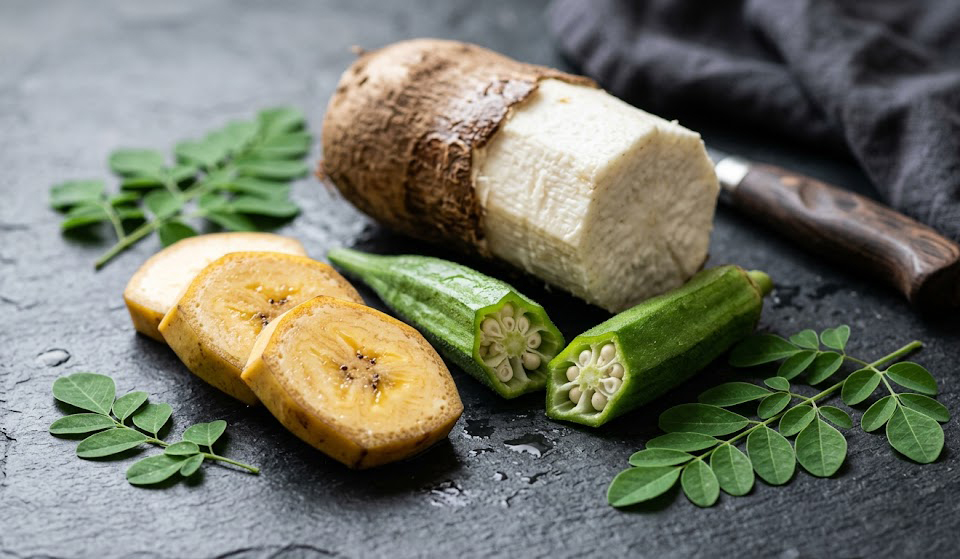
Ingredient #4: Moringa — The Quietly Growing Functional Ingredient

4
Moringa is often introduced as a “health ingredient,” but in practice, it behaves more like a functional leafy green.
What Buyers Need to Understand First
Moringa appears in two main forms:
- Fresh leaves → used in cooking, similar to spinach
- Powdered form → used in beverages or supplements
The confusion happens when buyers assume they are interchangeable. They are not.
Fresh moringa has:
- A slightly bitter, earthy taste
- A short shelf life
- High sensitivity to heat and storage conditions
Powdered moringa, on the other hand, is:
- More stable
- Easier to transport
- Less versatile in traditional cooking
Why It’s Gaining Traction in Dubai
Moringa fits naturally into existing demand for:
- Plant-based diets
- Functional nutrition
- Ingredient-driven menus
However, its supply is still inconsistent.
Some weeks, it is readily available through African vegetables UAE delivery networks. Other times, it disappears entirely due to import gaps or low turnover.
Common Mistake
Buying fresh moringa without a clear use plan.
Because it wilts quickly, delayed usage often leads to waste—especially in households unfamiliar with how to prepare it.
Ingredient #5: Bitter Leaf — High Value, High Risk

4
Bitter leaf is one of the most misunderstood African greens.
Not because it’s difficult to cook—but because it requires preparation discipline.
What Makes It Challenging
As the name suggests, it is naturally bitter.
Before cooking, it must be:
- Washed repeatedly
- Squeezed to remove excess bitterness
- Properly cleaned to improve taste
Skipping or rushing this process results in:
- Overpowering bitterness
- Unusable dishes
- Ingredient waste
Supply Considerations in UAE
Bitter leaf is usually:
- Imported in small batches
- Sold in bundled form
- Less standardized in quality compared to common greens
For buyers, this means:
- Visual inspection is critical
- Supplier trust becomes important
In practice, suppliers working closely with Dubai-based distributors such as JMB Farm Fresh often observe that demand for niche greens like bitter leaf is highly irregular—spiking around specific community or restaurant needs rather than steady daily consumption.
What Most Articles Don’t Explain: The Real Risks of Buying “New” Ingredients
Many guides focus on recipes.
Few explain the operational side.
For buyers—especially businesses—the real concern is not how to cook these ingredients.
It’s what happens when sourcing goes wrong.
1. Inconsistent Supply Cycles
Unlike staple vegetables, African ingredients often follow:
- Smaller import volumes
- Less frequent shipments
- Higher sensitivity to demand fluctuations
This leads to:
- Sudden stockouts
- Inconsistent weekly availability
- Difficulty planning menus
2. Shorter Shelf Life (If Mishandled)
Many of these ingredients are:
- Less processed
- Less standardized
- More sensitive to temperature changes
Without proper storage:
- Leafy greens wilt quickly
- Plantains overripen unevenly
- Okra loses firmness
3. Quality Variation Between Batches
Because sourcing is less centralized:
- Two shipments of the same ingredient can differ significantly
- Texture, size, and freshness may vary
For restaurants, this creates inconsistency in:
- Dish quality
- Cooking time
- Customer experience
How Experienced Buyers Handle This (And Why It Matters)
Buyers who regularly work with diverse produce don’t rely on fixed assumptions.
They adapt.
They Evaluate Freshness Differently
Instead of relying only on appearance, they check:
- Firmness
- Moisture retention
- Smell
- Ripeness stage (especially for plantains)
They Buy in Controlled Quantities First
When testing new ingredients:
- Start small
- Observe shelf life
- Test kitchen usage
This reduces risk before scaling.
They Build Supplier Relationships, Not One-Off Purchases
With niche ingredients, consistency improves when:
- Suppliers understand your usage pattern
- Orders become predictable
- Communication improves around availability
Some UAE buyers prefer working with established wholesale produce providers rather than fragmented retail sourcing, especially when dealing with non-standard items.
Seasonal Reality: Timing Matters More Than Most Buyers Realize
Dubai’s produce supply is heavily influenced by import timing, not just local demand.
For African ingredients, this is even more pronounced.
Winter vs Non-Winter Availability
During cooler months:
- Import conditions are more stable
- Shelf life improves
- Variety tends to increase
During hotter periods:
- Transport becomes more sensitive
- Spoilage risk rises
- Availability may drop
What This Means for Buyers
Planning matters.
If you are:
- A restaurant → align menu trials with stable supply windows
- A household → avoid overbuying unfamiliar ingredients during uncertain availability
A Balanced View: Why These Ingredients Are Worth Exploring (And When They’re Not)
It’s easy to frame African ingredients as “the next big thing.”
That’s not entirely accurate.
They are valuable—but context matters.
When They Make Sense
- You want to diversify menus
- You are exploring plant-based or whole-food cooking
- You have access to reliable suppliers
- You are willing to learn preparation methods
When They Don’t
- You need strict consistency in supply
- You are operating with tight storage constraints
- You are unfamiliar with preparation techniques and unwilling to experiment
The difference between success and frustration often comes down to expectation management, not ingredient quality.
Where Dubai’s Market Is Heading Next
African cuisine is unlikely to remain niche.
But it won’t become mainstream overnight either.
Instead, expect:
- Gradual integration into fusion menus
- Increased availability of core ingredients like plantain and okra
- Slow normalization of less familiar greens
For suppliers, this means adapting logistics.
For buyers, it means learning early—before the market becomes crowded.
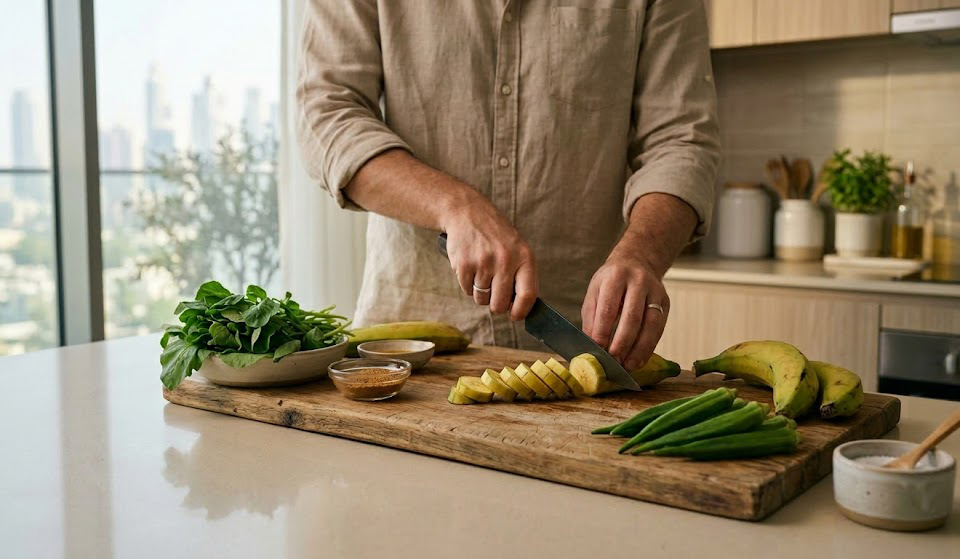
Practical Buying Guide: How to Approach African Ingredients Without Wasting Money
For most buyers, the goal is not to become an expert in African cuisine overnight.
It is to experiment without unnecessary cost, waste, or inconsistency.
Start With a “Low-Risk Basket”
Instead of buying everything at once, begin with ingredients that are:
- Easier to store
- More forgiving in cooking
- Widely used across cuisines
A practical starting mix:
- Plantain (mixed ripeness if possible)
- Okra (smaller, firm pods)
- One leafy item (moringa or similar)
Avoid starting with:
- Large yams (difficult to portion)
- Bitter leaf (requires preparation experience)
Understand Shelf Life Before You Buy
Many issues in African vegetables UAE delivery come from mismatched expectations.
A quick reference:
- Plantain → 3–7 days depending on ripeness
- Okra → 2–4 days (best used quickly)
- Moringa leaves → 1–2 days fresh
- Bitter leaf → longer if properly processed
Buying without this awareness leads to:
- Waste
- Frustration
- Incorrect assumptions about quality
Adjust Storage, Not Just Cooking
Dubai’s climate plays a major role.
Even with indoor storage:
- Humidity and heat affect produce stability
- Refrigeration is not always the best solution
For example:
- Plantains should not always be refrigerated early
- Okra benefits from dry, cool storage
- Leafy greens need airflow, not compression
These small adjustments often matter more than cooking technique.
Real-World Use Cases: How Buyers Are Actually Using These Ingredients
1. Restaurants: Controlled Integration
Most restaurants do not fully shift to African cuisine.
Instead, they:
- Introduce one or two ingredients
- Test customer response
- Expand gradually
Examples:
- Plantain as a side with grilled proteins
- Okra incorporated into existing stews
- Moringa used in health-focused dishes
This reduces risk while allowing innovation.
2. Catering Businesses: Volume With Simplicity
Caterers focus on:
- Ingredients that scale well
- Minimal preparation complexity
Plantain and yam are often preferred here because:
- They are filling
- They adapt well to bulk cooking
- They offer something different without complicating operations
3. Households: Trial and Adaptation
For families, the approach is simpler:
- Try one ingredient per week
- Combine it with familiar recipes
- Adjust based on taste and ease
For example:
- Add okra to existing curry or stew
- Use ripe plantain as a sweet side instead of dessert
Common Mistakes That Lead to Negative First Experiences
These are consistent across both households and businesses.
Mistake 1: Buying Based on Curiosity Alone
Curiosity drives the first purchase.
But without:
- A cooking plan
- Storage understanding
The result is often waste.
Mistake 2: Expecting Supermarket Consistency
African ingredients are still developing within Dubai’s supply chain.
That means:
- Variation is normal
- Appearance may differ from expectations
Judging quality only by visual perfection leads to poor decisions.
Mistake 3: Ignoring Preparation Requirements
Some ingredients—especially bitter leaf and yam—require:
- Time
- Technique
- Familiarity
Skipping this leads to:
- Incorrect cooking results
- Misjudging the ingredient itself
The Role of Supply Networks in Product Quality
Behind every ingredient is a sourcing system.
Understanding this helps explain why quality varies.
Fragmented vs Structured Supply
Fragmented sourcing:
- Small, independent suppliers
- Inconsistent availability
- Variable quality
Structured sourcing:
- Coordinated import cycles
- Better storage handling
- More predictable supply
In practice, suppliers working within more structured networks—including those connected to established distributors in Dubai—tend to offer more consistency over time.
Why This Matters for Buyers
Consistency affects:
- Menu planning
- Cost control
- Customer experience
This is why many professional buyers move away from one-off retail sourcing toward more stable supply relationships as they scale.
Looking Ahead: What Will Change in the Next 2–3 Years
The current state of African ingredients in Dubai is transitional.
Based on observed patterns, the likely developments include:
1. More Standardization
- Better grading of produce
- Improved consistency in size and quality
- Clearer labeling for buyers
2. Wider Retail Availability
As demand stabilizes:
- Supermarkets will begin stocking more regularly
- Online platforms will improve reliability
3. Better Buyer Education
More content, guides, and supplier communication will help:
- Reduce confusion
- Improve usage
- Lower waste
Conclusion: A Category Worth Learning—But Not Rushing
African cooking ingredients are not a passing trend.
They represent a gradual expansion of Dubai’s food supply landscape.
For buyers, the opportunity is real—but so are the challenges.
The difference lies in approach:
- Start small
- Learn handling and storage
- Build familiarity over time
Those who treat these ingredients as a process—not a one-time experiment—are the ones who benefit most.
FAQ Section
1. Where can I find African cooking ingredients in Dubai?
They are available through select wholesale markets, specialized grocers, and some online delivery platforms. Availability varies depending on import cycles and demand.
2. Are African vegetables more expensive than regular produce?
Not necessarily. Some items like plantains and okra are affordable, while others may cost more due to limited supply or import logistics.
3. How do I know if plantain is ripe?
Green plantains are firm and starchy. Yellow ones are slightly sweet. Black-skinned plantains are fully ripe and best for frying.
4. Why does okra sometimes turn slimy?
This is natural. It depends on the variety and cooking method. Quick cooking at higher heat can reduce the slimy texture.
5. Is moringa better fresh or powdered?
Both have uses. Fresh moringa is better for cooking, while powdered moringa is more stable and used in drinks or supplements.








 Home
Home  Whishlist
  Compare
  Checkout