




















Introduction: When “Healthy” Becomes Misleading
In the UAE, fruit is often seen as the safest food choice.
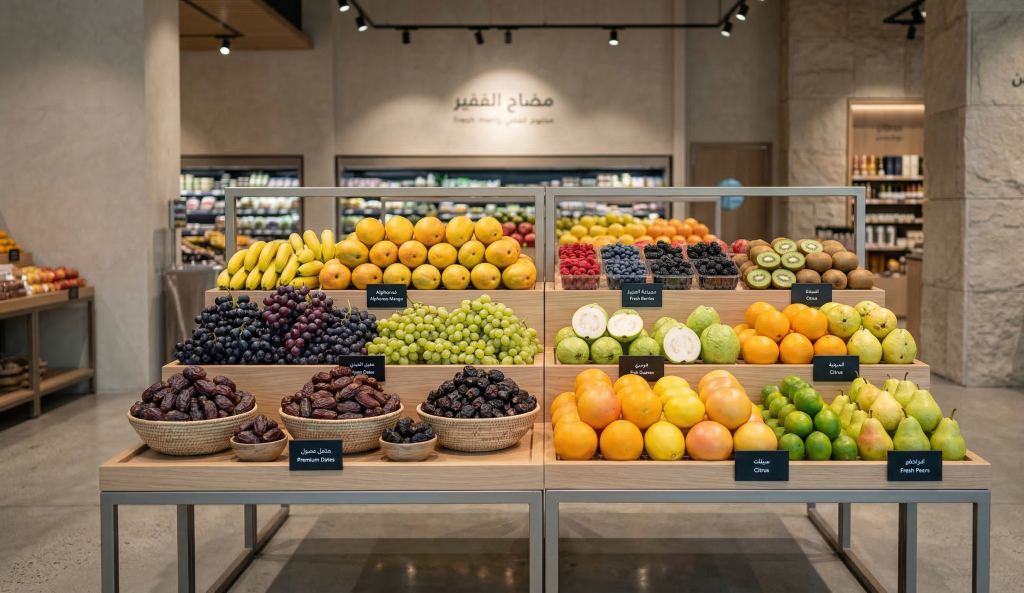
Walk through any supermarket in Dubai or Abu Dhabi and you’ll see baskets filled with mangoes, bananas, grapes, and imported berries — all positioned as “clean eating” staples. For families, restaurants, and even procurement teams, fruit feels like a low-risk decision.
But in practice, many buyers are unknowingly over-consuming high-sugar fruits.
This is not about avoiding fruit. It’s about balance, sourcing awareness, and understanding how different fruits behave in the body — especially in a region where most produce is imported, stored, and transported over long distances.
Across conversations with chefs, diet-conscious families, and even wholesale buyers, a pattern keeps appearing:
- “We thought fruit sugar doesn’t count.”
- “We switched to fruit instead of dessert.”
- “We buy what looks fresh — not what’s actually suitable.”
In reality, some of the most commonly consumed fruits in the UAE have a high glycaemic impact (meaning they raise blood sugar quickly), especially when eaten frequently or in large portions.
This matters not only for individuals managing energy levels or diabetes, but also for:
- Restaurants designing balanced menus
- Caterers planning healthy meal packages
- Families trying to reduce sugar without removing fruit
The goal is not restriction. It’s smarter substitution.
Why Fruit Choices Matter More in the UAE
Imported Supply Changes Nutritional Reality
Unlike regions with local seasonal abundance, the UAE relies heavily on imported fruit.
That means:
- Fruits are often harvested early for transport
- Sugar levels can vary depending on ripening methods
- Storage conditions affect both taste and glycaemic response
For example, a mango ripened artificially after transport may have a different sugar profile compared to one ripened naturally on the tree.
The “Healthy Halo” Problem
In both retail and hospitality, fruit often carries a “health halo” — meaning people assume:
- All fruits are equally healthy
- Quantity doesn’t matter
- Fruit can replace all sweet cravings safely
This is where most overconsumption happens.
Understanding Low Sugar Fruits in the UAE Context
Before going into the list, it helps to clarify one key idea:
What does “low sugar” actually mean?
Low sugar fruits typically:
- Have lower natural fructose content
- Cause slower rises in blood sugar
- Provide fiber and water that balance digestion
These are often referred to as low glycaemic fruits.
In UAE markets, these are usually:
- Berries (imported, often premium)
- Citrus (locally more accessible in winter)
- Kiwi
- Guava (often underrated)
- Melons (depending on type and portion)
The challenge is not availability — it’s buying habits.
1. Bananas (Overused) → Swap With: Guava
Bananas are one of the most consumed fruits in the UAE.
They’re convenient, affordable, and widely available year-round. For many households and cafeterias, they’re the default fruit.
The Issue
- High natural sugar content
- Often eaten in multiples (2–3 at a time)
- Frequently used as a snack replacement
A Better Swap: Guava
Guava is widely available but underused.
Why it works:
- Lower sugar compared to bananas
- High in fiber (helps slow sugar absorption)
- More filling per portion
In procurement settings, guava also tends to have better shelf stability when handled properly.
2. Mangoes (Especially Peak Season) → Swap With: Papaya
During mango season, especially with Pakistani and Indian varieties entering UAE markets, consumption spikes sharply.
The Issue
- Extremely high sugar when fully ripe
- Easy to overconsume due to taste
- Often used in juices and desserts
A Better Swap: Papaya
Papaya offers a similar tropical profile without the sugar intensity.
Why it works:
- Lower glycaemic load
- Easier digestion (often recommended in gut-friendly diets)
- More consistent quality in supply chains
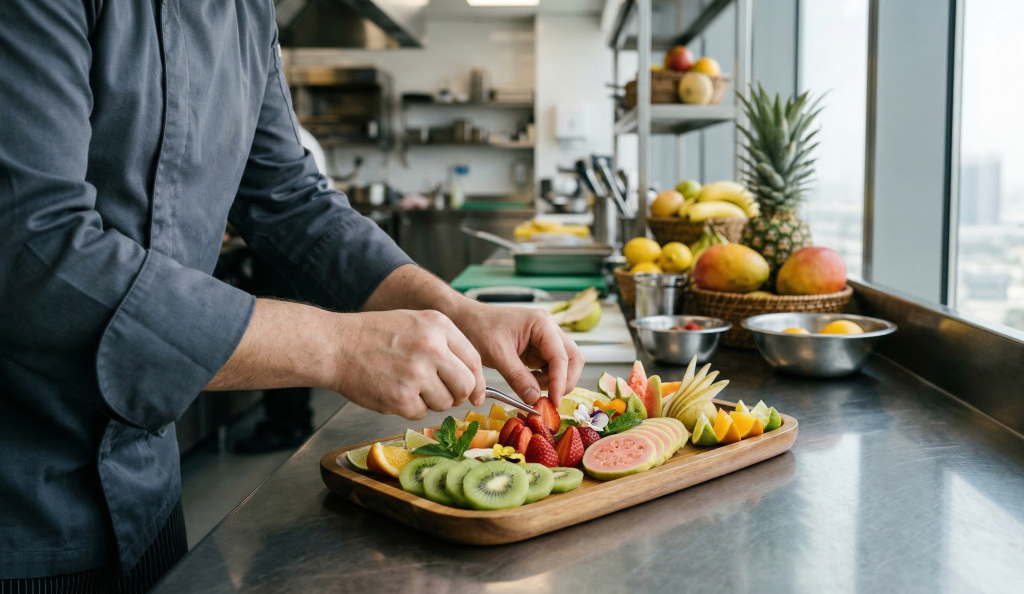
For catering and hospitality, papaya also provides better portion control in fruit platters.
3. Grapes (Mindless Eating) → Swap With: Berries
Grapes are often eaten without portion awareness.
A single bowl can contain more sugar than expected.
The Issue
- Small size leads to overconsumption
- High sugar density
- Common in buffets and lunchboxes
A Better Swap: Berries (Strawberries, Blueberries)
Though more expensive, berries are increasingly available through wholesale channels.
Why they work:
- Lower sugar per serving
- Higher antioxidant content
- Naturally portion-controlled
In practice, suppliers working closely with Dubai-based distributors such as JMB Farm Fresh often observe that buyers shifting toward berries use less volume but achieve higher perceived value.
4. Dates (Daily Habit) → Swap With: Fresh Figs (Seasonal)
Dates are deeply rooted in UAE food culture.
They are nutritious — but often overconsumed.
The Issue
- Very high natural sugar
- Often eaten multiple times per day
- Used in “healthy desserts”
A Better Swap: Fresh Figs (When Available)
Figs are seasonal but worth considering.
Why they work:
- Lower sugar concentration per fruit
- Higher fiber
- Less likely to be overeaten
For buyers, timing matters. Figs are best sourced during specific seasonal windows, unlike dates which are available year-round.
5. Apples (Default Choice) → Swap With: Pears
Apples are a safe, default fruit across households and institutions.
The Issue
- Moderate sugar, but often eaten daily
- Limited fiber compared to alternatives (depending on variety)
- Over-reliance reduces dietary diversity
A Better Swap: Pears
Pears are often overlooked in UAE purchasing.
Why they work:
- Higher fiber
- Slower digestion
- More hydrating
From a sourcing perspective, pears can sometimes offer better value in wholesale markets, especially during peak import cycles.
6. Pineapple (Juice Culture) → Swap With: Melon (Cantaloupe)
Pineapple is widely used in juices, fruit bowls, and hotel breakfasts.
The Issue
- High sugar when juiced
- Easy to consume in large quantities
- Often served without fiber (in juice form)
A Better Swap: Cantaloupe (Melon)
Melons are widely available and often more balanced.
Why they work:
- Higher water content
- Lower sugar per volume
- More refreshing in hot climates
For large-scale catering, melons also reduce cost volatility compared to imported pineapples.
7. Watermelon (Overconsumed in Summer) → Swap With: Kiwi
Watermelon is almost unavoidable in the UAE, especially during hotter months.
It’s refreshing, hydrating, and often served in large portions at homes, buffets, and corporate settings.
The Issue
- High glycaemic index despite low calorie density
- Very easy to overeat due to water content
- Often consumed without protein or fiber pairing
Many people assume watermelon is “light,” but large servings can still cause quick spikes in blood sugar.
A Better Swap: Kiwi
Kiwi is increasingly available through imported supply chains and online fruit delivery platforms.
Why it works:
- Lower glycaemic impact
- Higher vitamin C and fiber
- Naturally portion-controlled (1–2 fruits per serving)
For households and catering, kiwi also introduces variety without increasing sugar load.
8. Fruit Juices (Perceived Healthy) → Swap With: Whole Citrus
Across UAE cafés, offices, and even homes, fruit juice is still treated as a healthy daily option.
The Issue
- Removes fiber (which slows sugar absorption)
- Concentrates sugar into a single glass
- Often combines multiple high-sugar fruits
A glass of “fresh juice” can contain the sugar equivalent of several whole fruits.
A Better Swap: Whole Citrus (Oranges, Grapefruit)
Whole fruits retain fiber and improve satiety.
Why they work:
- Slower sugar release
- More filling than juice
- Widely available, especially during UAE winter season
For procurement teams, switching from juice-heavy menus to whole fruit can also reduce waste and spoilage, since whole fruits have longer usable windows.
9. Dried Fruits (Hidden Sugar) → Swap With: Fresh Berries or Plums
Dried fruits are commonly marketed as “natural snacks.”
They are widely used in:
- Office snack boxes
- Hotel buffets
- Health-focused meal plans
The Issue
- Water removed → sugar becomes concentrated
- Easy to overconsume small portions
- Often mistaken as equivalent to fresh fruit
A Better Swap: Fresh Berries or Plums
Fresh alternatives provide similar satisfaction with less sugar density.
Why they work:
- Higher water content
- Lower calorie concentration
- Better portion awareness
From a supply perspective, dried fruits are stable — but fresh alternatives offer better nutritional balance, especially for daily consumption.
10. Smoothie Bowls (Trend-Driven) → Swap With: Balanced Fruit + Protein Pairing
Smoothie bowls have become popular across Dubai’s health cafés and home kitchens.
They look clean, colorful, and nutrient-rich.
The Issue
- Often combine multiple high-sugar fruits
- Include toppings like granola, honey, and dates
- Lack protein balance
Even when made with “healthy” ingredients, the total sugar load can be significant.
A Better Approach: Balanced Fruit Pairing
Instead of eliminating smoothies, adjust how they’re built.
Practical alternative:
- Use low glycaemic fruits (berries, kiwi)
- Add protein sources (yogurt, nuts)
- Limit high-sugar additions
This approach maintains taste while improving metabolic balance.
What Buyers Often Miss: It’s Not Just the Fruit — It’s the Pattern
Across UAE households and food businesses, the same mistake repeats:
The issue is not one fruit. It’s repeated daily patterns.
Common Real-World Scenarios
In homes:
- Banana in the morning
- Juice in the afternoon
- Dates at night
In catering:
- Grapes and pineapple in every fruit bowl
- Juice as default beverage
- Dried fruits in snack trays
In restaurants:
- Mango-based desserts
- Smoothie-heavy menus
- Fruit platters built for visual appeal, not balance
Individually, these choices seem reasonable.
Combined, they create consistently high sugar intake, even when no processed sugar is added.
Seasonality in the UAE: Why It Affects Better Fruit Choices
One of the most overlooked factors in fruit selection is seasonality.
Winter (Peak Opportunity for Better Choices)
During UAE winter months, the market sees stronger availability of:
- Citrus fruits (oranges, mandarins)
- Strawberries
- Imported pears and apples at better quality
These are ideal for low glycaemic fruit strategies.
Summer (Higher Risk of Overconsumption)
Summer brings:
- Watermelon
- Mango imports
- Increased juice consumption
This is where most imbalance occurs.
Understanding this seasonal shift helps both households and buyers adjust sourcing decisions instead of repeating habits year-round.
Wholesale vs Retail: Does It Change Fruit Quality or Sugar Levels?
This is a common question among buyers.
The Short Answer: Not directly — but indirectly, yes.
The sugar content of fruit depends on:
- Variety
- Ripeness
- Growing conditions
However, sourcing channels affect:
- Freshness consistency
- Storage duration
- Handling practices
In Practice
Buyers working through wholesale channels often gain:
- More control over ripeness stage selection
- Better insight into origin and seasonality
- Ability to plan substitutions in advance
Retail buyers, on the other hand, tend to:
- Buy based on appearance
- Follow habit rather than planning
- Have limited visibility into sourcing cycles
That said, wholesale is not automatically better.
It requires:
- Proper storage
- Volume planning
- Understanding of shelf life
Without that, waste can increase.
A Practical Framework for Smarter Fruit Buying
Instead of focusing on “good vs bad” fruits, a more useful approach is balance.
Use This Simple Rule
For every high-sugar fruit you buy, include one lower-sugar alternative.
Example Basket Adjustment
Instead of:
- Bananas
- Grapes
- Mango
Try:
- Bananas
- Guava
- Berries
This keeps familiarity while improving overall balance.
Why This Matters for Businesses
For restaurants, caterers, and grocery buyers, fruit selection affects more than nutrition.
It impacts:
- Customer perception of health
- Menu consistency
- Cost control
- Waste management
Small adjustments — like replacing part of a fruit platter with lower sugar options — can improve both health positioning and operational efficiency.
Making Better Fruit Choices Without Overcomplicating It
Most people don’t need a complete overhaul of their fruit habits.
What works better — especially in the UAE’s fast-moving food environment — is small, repeatable adjustments.
Start With Portion Awareness
Even low sugar fruits can become excessive when portions are large.
A practical guideline used by many nutrition-conscious buyers:
- 1 serving = 1 medium fruit or a small bowl
- Avoid stacking multiple fruits in one sitting (especially high-sugar ones)
This becomes especially important in buffet settings, where fruit is often presented as “unlimited.”
Build Contrast Into Every Purchase
Instead of buying similar fruits, aim for contrast:
- One high-sugar fruit (for taste and familiarity)
- One low glycaemic fruit (for balance)
This approach works well for:
- Weekly household shopping
- Office fruit programs
- Hotel breakfast planning
Think in Terms of Use, Not Just Purchase
A common mistake in UAE buying patterns is purchasing fruit without a clear plan.
That leads to:
- Overripe fruit
- Last-minute juicing
- Waste or overconsumption
A better approach:
- Assign purpose before buying
- Snack fruit
- Breakfast fruit
- Dessert fruit
This reduces both waste and sugar spikes.
Pay Attention to Ripeness
Ripeness directly affects sugar levels.
In imported supply chains, this becomes even more important.
- Fully ripe fruit = higher sugar concentration
- Slightly firm fruit = slower sugar release
Experienced buyers often request mixed ripeness batches to manage consumption over time.
Common Misunderstandings in the UAE Market
“Fruit Sugar Doesn’t Count”
This is one of the most persistent beliefs.
While fruit sugar is natural, the body still processes it as sugar.
The difference is:
- Whole fruit includes fiber (which helps)
- But quantity still matters
“If It’s Fresh, It’s Always Better”
Freshness is important — but it doesn’t automatically mean better for every use case.
For example:
- Very ripe fruit is great for taste
- But not ideal for high-frequency consumption
Balance between freshness and functional use is key.
“Imported Fruits Are Always Superior”
Imported fruits dominate UAE shelves, but quality depends on:
- Harvest timing
- Storage conditions
- Handling during transport
In some cases, less popular fruits (like guava or papaya) offer:
- More consistent quality
- Better value
- More suitable nutritional profiles
The Tradeoffs: What This Approach Doesn’t Solve
It’s important to stay realistic.
Shifting to low sugar fruits does not:
- Eliminate all sugar intake
- Replace a balanced diet
- Work without portion control
There are also tradeoffs:
- Berries and kiwi can be more expensive
- Some low-sugar fruits have shorter shelf life
- Supply consistency varies across seasons
This is why most experienced buyers don’t aim for perfection.
They aim for better averages over time.
A Quiet Shift Happening in UAE Produce Buying
Across both households and professional kitchens, there is a gradual shift:
- Moving from default fruit choices to intentional selection
- From visual appeal to functional value
- From repetition to rotation
In practice, suppliers working closely with established distributors in Dubai — including names like JMB Farm Fresh — often observe that buyers who diversify fruit selection tend to experience:
- Lower waste
- Better consistency in quality
- More controlled consumption patterns
This is not a trend driven by marketing.
It’s a response to real-world constraints: cost, storage, and health awareness.
Final Thoughts: Smarter, Not Stricter
Fruit is not the problem.
Habits are.
In the UAE, where availability is high and variety is constant, it’s easy to fall into repetitive buying patterns — especially with fruits that are familiar, sweet, and easy to consume.
But small changes make a measurable difference:
- Swap one fruit instead of removing three
- Balance instead of restrict
- Plan instead of react
Over time, these adjustments create a more stable, practical approach to eating — whether at home or across a large-scale food operation.
FAQs
1. What are the best low sugar fruits available in the UAE?
Common options include guava, berries, kiwi, citrus fruits (like oranges and grapefruit), and pears. Availability depends on season, but most are accessible through both retail and wholesale channels.
2. Is fruit bad for blood sugar in the UAE diet?
Not inherently. The issue is overconsumption of high-sugar fruits like mangoes, grapes, and dates. Choosing low glycaemic fruits and controlling portions helps manage blood sugar levels.
3. Are fruit juices healthy compared to whole fruits?
Whole fruits are generally better because they contain fiber, which slows sugar absorption. Juices concentrate sugar and are easier to overconsume.
4. Why are berries considered better for a low sugar diet?
Berries have lower sugar content per serving and higher fiber. They also encourage smaller portion sizes, making them easier to manage in daily diets.
5. Does buying fruit wholesale improve quality?
It can improve consistency and planning, but only if storage and handling are managed properly. Wholesale buying allows better control over ripeness and sourcing, but it requires experience.








 Home
Home  Whishlist
  Compare
  Checkout